This article is about understanding the background and data foundation for GAIS benchmarks.
If you instead need guidance on how to set up and read benchmarks on the platform, read HERE.
Four different benchmarks
GAIS offers different types of benchmarks in connection with wellbeing surveys:
- Own company report
- GAIS Live Industry ⭐
- GAIS Overall Benchmark ⭐
- Job Satisfaction Index
This feature is only available to customers with paid subscriptions
1. Own company report
Benchmarking against your own company report means that you can compare with the company's own reports. Comparison with your own report can be done in several ways, e.g.:
- A subset of the report - e.g. a department - is compared with the company's overall results
- The overall company report is compared with a previous report
- A subset of the report is compared with a previous report for the same subset
Benefits: There are great benefits to comparing with your own previous reports. It is often more interesting to follow your own development than to compare with others. This applies both to the company as a whole - and to each individual subset (e.g. a department).
Use: You can use benchmarking against your own report in connection with all survey types in GAIS.
2. GAIS Live Industry
GAIS Live Benchmarks make it possible to follow the development in wellbeing compared to your industry. Live Benchmarks are always updated with current data, so you get a real-time picture of the comparison.
Benefits: In relation to recruitment etc., it can be an advantage to compare yourself with other companies in your industry.
Use: GAIS Live Benchmark can only be used in connection with GAIS wellbeing surveys - not APV or factor surveys.
Where does the GAIS Live Industry data come from?
GAIS Live Benchmark draws on all the data that is submitted to the GAIS platform every day through users' responses - unless users indicate that their data may not be used for statistical purposes. All data is anonymised and can therefore be used without conflicting with anonymity or GDPR rules.
How are the industries defined?
GAIS uses official and fine-grained industry classifications from the CVR register. In a few cases, we have edited the naming or grouping to accommodate customer needs.
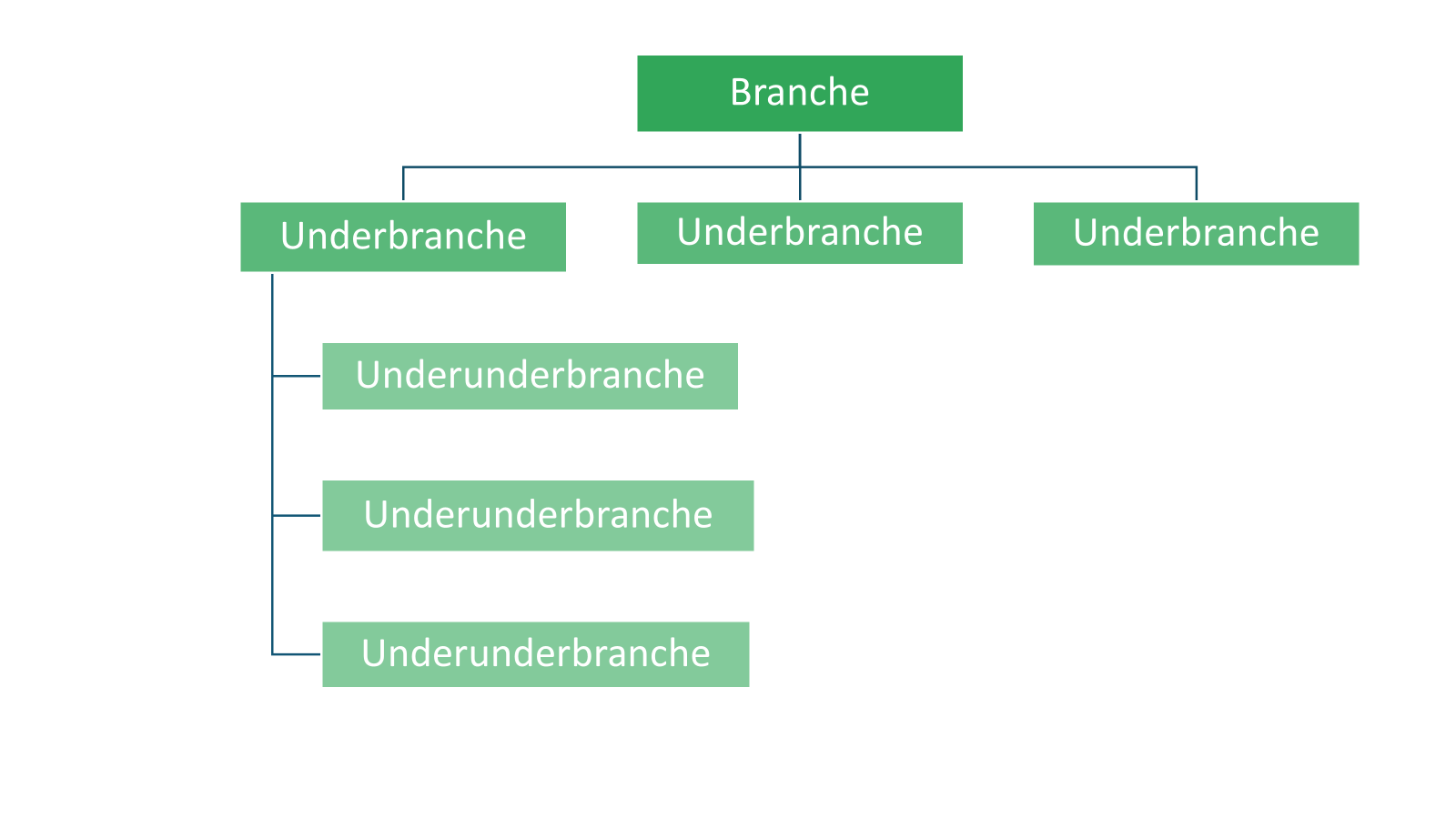
It consists of three levels:
- Main industry: The main industries, according to Statistics Denmark, are:
- Agriculture, forestry and fishing
- Manufacturing, mining and quarrying, and utility services
- Construction
- Trade and transport
- Information and communication
- Financial and insurance
- Real estate
- Business services
- Public administration, education and health
- Arts, entertainment and other services
- Sub-industry: A sub-industry is a subset of the main industry. A sub-industry of Manufacturing, mining and quarrying, and utility services is e.g. Manufacturing
- Sub-sub-industry: A sub-sub-industry is a subset of a sub-industry. A sub-sub-industry of Manufacturing is e.g. Food and beverage manufacturing.
Which industry does my company belong to?
Your company is automatically linked to an industry via your CVR number.
- With a GAIS Pro subscription you have access to GAIS Live Industry at the main level (level 1). This means you can benchmark yourselves against other companies within the main industry you belong to.
- With a GAIS Premium/Enterprise subscription you have access to GAIS Live Industry at all levels. Your company is placed in a sub-sub-industry if there is enough data for the data foundation to be valid. If GAIS does not have sufficient data to show a benchmark for a sub-sub-industry, your benchmark will be one level up - i.e. sub-industry. And again - if there is not sufficient data in the sub-industry, your benchmark will be at the main industry level.
Example: If your company is part of an industry called "Rail operations", and there are not enough other companies/responses to benchmark against, you will instead be presented with the benchmark for "Transport", where there is enough data for a valid benchmark.
So you can rest assured that no matter which level your benchmark is shown at, the data foundation is valid.
When is the data foundation valid?
The validity of an industry benchmark is based on an overall assessment of several factors:
- the number of responses in the benchmark
- the number of companies included in the benchmark
- when the data was collected
We can guarantee that all benchmarks have over 500 responses distributed across a minimum of 5 companies over the past 12-24 months. In many benchmarks, however, there are significantly more responses and companies.
3. GAIS Overall Benchmark
GAIS Overall Benchmark makes it possible to compare your wellbeing with the general level of job satisfaction measured across the entire GAIS platform regardless of industry. The benchmark is continuously updated with current data, so you always get a real-time picture.
To ensure a valid data foundation, requirements are set for the surveys that are included, such as the number of participants and when the data was collected. In practice, this means that the benchmark is based on more than 120.000 survey responses completed within the last five years.
Benefits: GAIS Overall Benchmark is a daily updated benchmark for all companies using GAIS - not divided by industry.
Use: GAIS Overall Benchmark can only be used in connection with GAIS wellbeing surveys - not APV or factor surveys.
4. Job Satisfaction Index
The God Arbejdslyst Index is a research-based mapping of job satisfaction among Danes. Since 2015, Videncenter for God Arbejdslyst has followed the development in job satisfaction across Danish employees. The benchmark figures for the Danish population that we use in GAIS are from 2021.
Benefits: The God Arbejdslyst Index is a representative benchmark for Danish employees - not divided by industry.
Use: GAIS Live Benchmark can only be used in connection with GAIS wellbeing surveys - not APV or factor surveys.
| Good advice on using benchmarks |
|---|
External benchmarking provides important insight into where your company stands compared to similar workplaces. But it is even more important to focus on internal development. Comparison with your own previous results is the most important benchmark for where your development should move over time. These are things you have control over yourselves, unlike what happens at the other companies. By analysing how you have performed since the last survey, you can identify what worked, what could be improved, and how different initiatives have affected wellbeing in the workplace. This focus helps create a culture where development and progression are central. It is essentially benchmarking against your own past. |
Was this article helpful?
That’s Great!
Thank you for your feedback
Sorry! We couldn't be helpful
Thank you for your feedback
Feedback sent
We appreciate your effort and will try to fix the article